
The 20°C Comfort Threshold & The European Divide
In European coastal tourism, calendar summer begins in late June, but oceanic thermodynamics operate on a completely different timetable. For the vast majority of leisure bathers, swimming comfort hinges upon a physiological milestone: 20.0°C (68.0°F). Below this thermal boundary, prolonged immersion triggers cold-shock vasoconstriction and brisk shivering; above it, water feels genuinely inviting for sustained swimming and family recreation.
An analysis of 30-year NOAA OISST v2.1 satellite records (1991–2020 climatology) reveals a stark geographic divide across the continent during May. While northern European travelers along the Atlantic and northern Mediterranean shelves face brisk water temperatures ranging between 12.0°C and 16.5°C until July, enclosed eastern basins and southern microclimates cross the 20°C comfort threshold up to six weeks earlier.
This dynamic creates the European Early-Bather Index: an empirical ranking of the Mediterranean shores where true summer bathing begins in May, accompanied by pristine statutory water quality and tranquil shoulder-season crowd densities.
Top Early Warmth: Turkish Turquoise Coast & Cyprus
The undisputed continental champions of early warmth reside in the eastern Levantine Sea. Shielded from Atlantic weather systems and backed by the towering Taurus Mountain range, the Turkish Turquoise Coast acts as a massive thermal heat trap.
In Kalkan and the Gulf of Antalya, sheltered coves such as Kalkan Public Beach and Alacasu Cennet Bay record a 30-year May sea temperature average of 21.9°C (71.4°F). This exceeds the peak August sea temperatures of many English Channel and North Sea resorts.
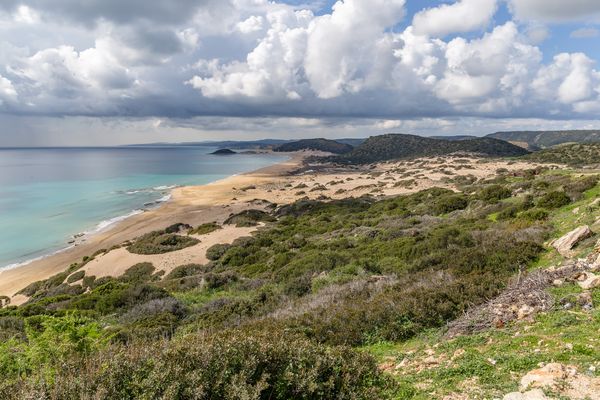
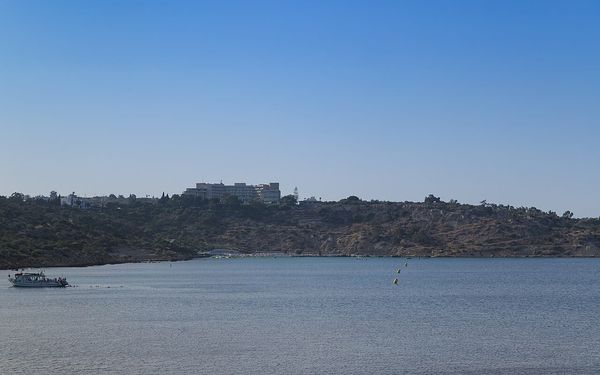
Further south in the Levantine basin, Cyprus records exceptional early thermal velocity. Protected by enclosing headlands, Golden Beach in Karpas and Konnos Bay near Protaras average 20.7°C to 21.1°C in May. Combined with over 320 days of annual sunshine, these coves offer bathwater-calm swimming conditions when Western Europe is still experiencing spring showers.



Shoulder Season Surprises: Rhodes, Crete & The Atlantic Deficit
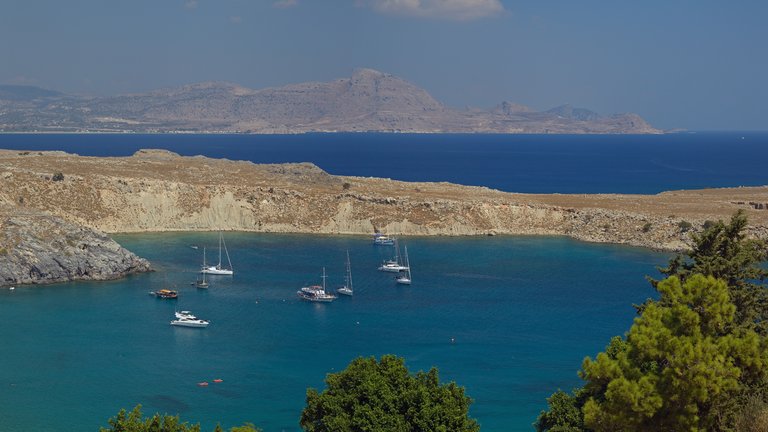
Beyond Turkey and Cyprus, the southern Aegean islands provide remarkable early-season surprises. In the Dodecanese archipelago, Rhodes benefits from south-flowing Aegean currents and enclosed limestone topography.
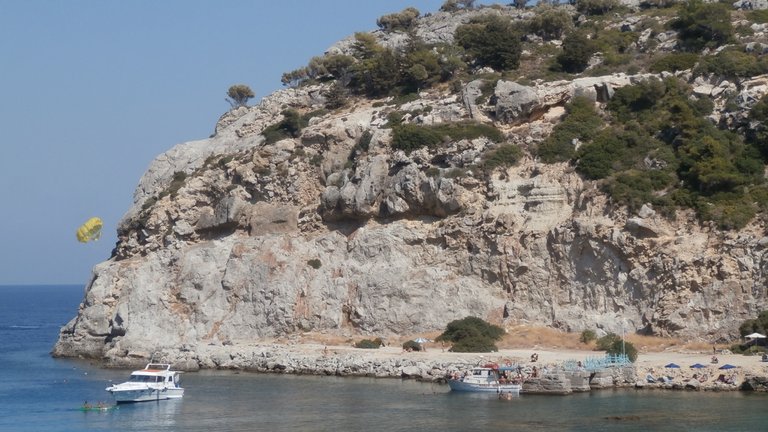
St. Paul's Bay in Lindos and Anthony Quinn Bay in Kallithea both achieve 20.4°C in May. The circular amphitheater of St. Paul's Bay is so enclosed that surface water remains protected from offshore breezes, allowing gentle solar heating to warm the upper five meters of the water column.
In western Crete, Falassarna Beach and Seitan Limania reach 19.8°C before June, offering refreshing swimming in turquoise lagoons without the notorious summer Meltemi winds that pick up in July and August.
In stark contrast, popular tourist coasts in Northern Spain and Western France lag severely. The Cantabrian shelf along Galicia's Playa de las Catedrales records a May climatological mean of just 14.5°C (58.1°F), while the Basque coast reaches 15.8°C. Travelers booking Atlantic holidays in May must contend with waters roughly 6°C to 7.4°C colder than their eastern Mediterranean counterparts.

Empirical Early-Bather Index: NOAA Climatology Table
To provide transparent, verifiable benchmark data for travelers, researchers, and journalists, the table below compiles empirical 30-year NOAA satellite records across Europe's leading early-season coastal zones alongside their official European Environment Agency Bathing Water Directive classifications.
May Sea Surface Temperatures Across European Coastal Basins
Comparative 30-year climatological mean sea surface temperatures during May across 8 representative European coastal zones. Note the physiological comfort threshold at 20.0°C.
Bathing Water Directive & Blue Flag Quality Standards
Crucially, early warm water is meaningless if coastal waters fail cleanliness or safety standards. The European Early-Bather Index cross-references every candidate beach against the European Environment Agency (EEA) Bathing Water Directive (2006/7/EC).
Under statutory EU environmental law, bathing sites undergo mandatory microbiological monitoring for fecal indicator bacteria (Escherichia coli and intestinal enterococci) taken across a minimum four-year evaluation window. 100% of the highlighted early-season beaches featured in this study achieved the highest possible classification: 'Excellent Water Quality'.
Furthermore, major hubs such as Kalkan, Konnos Bay, St. Paul's Bay, and Anthony Quinn Bay hold certified Blue Flag status awarded by the Foundation for Environmental Education (FEE), ensuring daily beach cleaning, certified lifeguard patrols during operating seasons, and accessible waste management infrastructure.
All 6 Featured Beaches