Why Beach Selection Matters with Kids in Crete
Crete spans more than 1,000 kilometers of coastline, but not all of it is family-friendly. Because Crete is a mountainous island exposed to distinct maritime winds from both the Aegean and the Libyan Seas, adjacent beaches can have wildly divergent conditions.
Some of the island's most famous postcard landmarks require descending steep, crumbling cliff paths in 35°C heat or driving hours along unpaved tracks with zero amenities. When traveling with young toddlers, infants, or stroller gear, choosing a beach with direct road access, calm shallows, and on-site facilities is the difference between an idyllic day and an exhausting ordeal.
Elafonissi Beach: Toddler-Safe Lagoon & Pink Sand
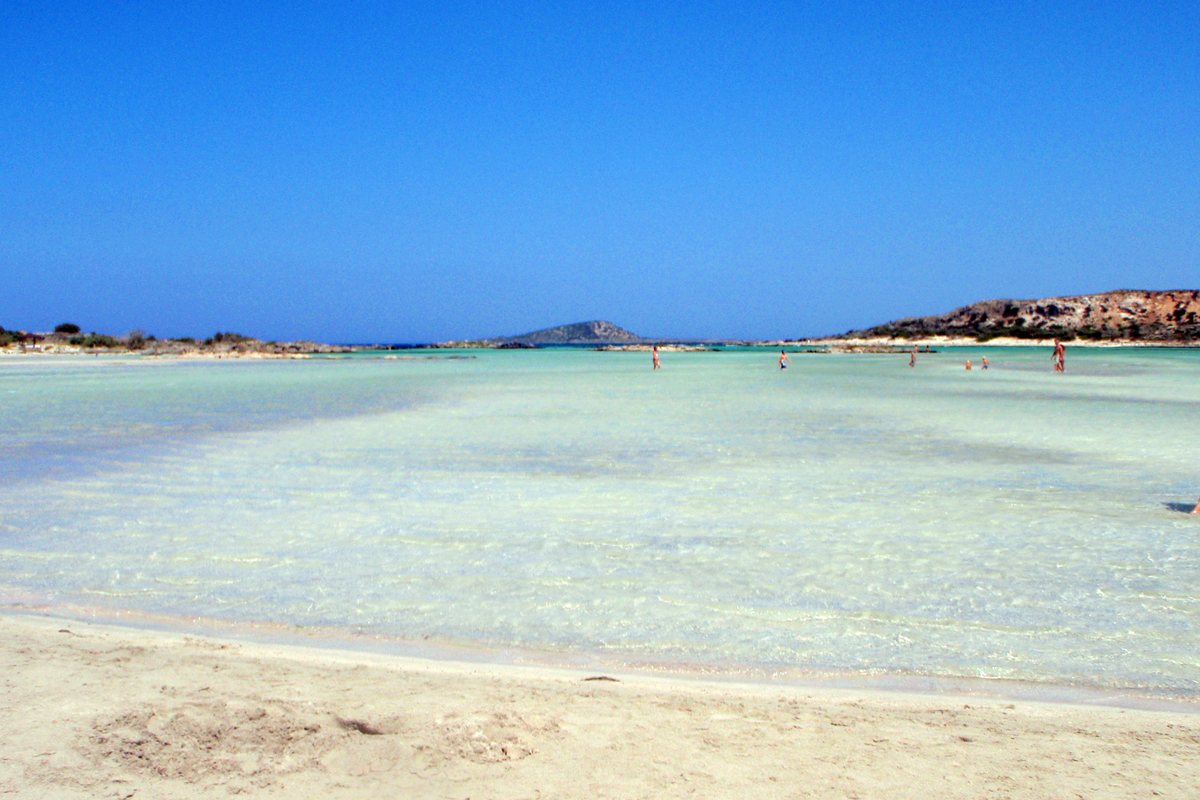
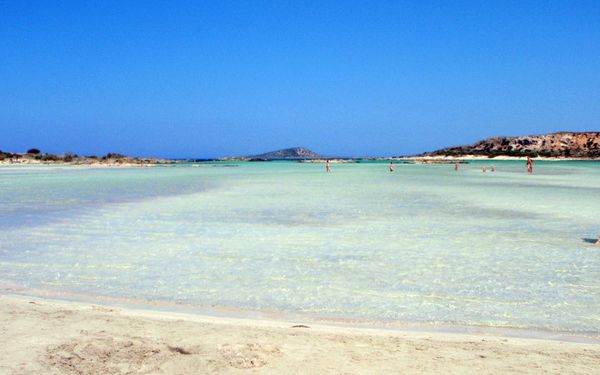
Located at the southwestern tip of Crete, Elafonissi is celebrated for its pastel pink-tinted sands, created by millions of pulverized red microorganisms and shells, but its real superpower for families is its expansive, sheltered lagoon.
Between the mainland and the protected island reserve lies a vast expanse of crystal-clear water that rarely exceeds knee depth, even when wading out 100 meters. The seafloor is completely free of sharp rocks, drop-offs, or undertows, functioning as nature's ultimate paddling pool where toddlers can splash safely.
The main tradeoff is popularity and exposure: Elafonissi gets intensely hot during midday and offers virtually no natural shade trees on the main sandbar. Arriving before 9:00 AM allows you to park close to the boardwalk and secure sunbeds before the day-trip buses arrive from Chania.

Vai Palm Beach: Calm Waters & Easy Drive-Up Access
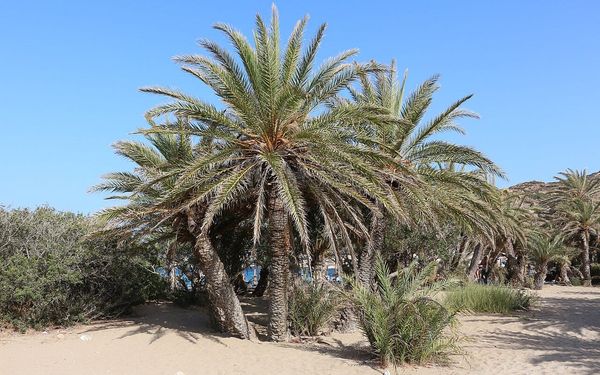
For families seeking a hassle-free, drive-up beach with calm water and complete amenities, Vai Palm Beach in eastern Crete is an outstanding choice. Backed by Europe's largest natural date palm grove (Phoenix theophrasti), the beach feels like an exotic oasis.
Unlike Crete's hike-in gorges, Vai features a paved parking area just 100 meters from the shoreline. The bay is naturally cupped by rocky headlands that buffer open sea chop, creating calm, clean swimming conditions with a gentle sandy gradient.
With beachside tavernas, organized restrooms, showers, and shaded walkways right off the sand, parents don't need to haul coolers or gear down steep paths. It provides the perfect balance of visual wonder and effortless convenience.
Falassarna Beach: Expansive Golden Sands & Gentle Entries
Situated on the Gramvousa Peninsula in western Crete, Falassarna consists of five consecutive wide bays with fine, golden-pink sand and exceptionally high water clarity.
The main central beach (Pachia Ammos) is over a kilometer long and nearly 150 meters wide. Even in the height of July and August, there is immense space for children to build sandcastles and play ball without bumping into neighboring sunbeds. Parking is available directly above the sand with short wooden boardwalk descents.
Conditions check: Because Falassarna faces directly west into the open Mediterranean, it catches afternoon breezes and gentle shorebreak waves. On calm days the water is tranquil and mirror-clear, but on windy afternoons you will want to keep small toddlers close to shore.
Balos Lagoon: Spectacular but Suited for Older Kids
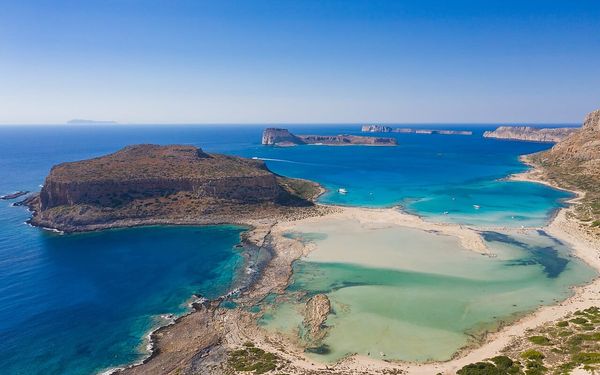
Balos Lagoon is arguably Crete's most photographed seascape, a surreal mosaic of turquoise water, white sandbanks, and wild Mediterranean scrub. Once you step into the lagoon, the water is ultra-shallow, warm, and utterly transparent.
However, reaching Balos by car requires navigating a rough, unpaved 8-kilometer gravel road along precipitous cliff edges, followed by a strenuous 25-minute hike down a rocky footpath with hundreds of stone steps. While coming down is manageable, climbing back up in 32°C heat while carrying tired toddlers or gear is grueling.
The alternative is a commercial day-cruise ferry from Kissamos Port, which deposits you directly at the shore without hiking. Recommendation: If traveling with babies or toddlers, consider Balos via boat only; for self-drive visits, save the hike until children are at least seven or eight years old.
North Coast vs South Coast Swell Dynamics
When deciding where to base your family vacation in Crete, coastal geography plays a decisive role. Crete's north coast (facing the Aegean Sea / Cretan Sea) is subject to the Meltemi, strong northerly winds that blow throughout July and August. Exposed northern beaches can experience significant surf and red-flag conditions during windy periods.
In contrast, sheltered bays along the south coast (facing the Libyan Sea) and western peninsulas are shielded from northern blows, though south-facing coastlines often feature steeper underwater drop-offs into deeper, cooler water masses.
For maximum safety with little children, look for enclosed horseshoe coves or natural barrier lagoons. Explore our verified directory of family-ready beaches in our dedicated Shallow Sand (Kids) Collection, or browse direct arrivals via the Chania Airport Gateway.
Frequently Asked Questions
What is the single best beach in Crete for toddlers? Elafonissi Beach is the undisputed favorite for toddlers thanks to its vast knee-deep lagoon, lack of steep drop-offs, and soft sand. Arrive before 9:00 AM to secure close parking and umbrella shade.
Can you take a stroller to Balos Lagoon? No. The trail down from the mountain parking lot to Balos is a rocky dirt path with uneven stone steps that is completely impassable with a stroller. Stroller-dependent families should visit Falassarna or Vai instead.
When is the sea warmest for children in Crete? According to 30-year NOAA satellite climatology, sea temperatures around Crete peak in August at 26.3°C and remain delightfully warm throughout September (25.1°C) and October (23.2°C), well above the 20°C comfort threshold.