Two Very Different Algarve Coasts
The Algarve's coastline splits into two genuinely different surf environments, and mixing them up is the most common mistake in trip planning. The west-facing Costa Vicentina coast takes direct Atlantic swell and is a real, occasionally serious surf coast; the south-facing coast, sheltered by the same geography that makes it popular for swimming, gets far smaller and gentler waves.
If you are coming to Portugal specifically to surf, the west coast is where to base yourself. Towns like Sagres, Aljezur, and Vila do Bispo position you within 15 minutes of multiple breaks facing both west and south, allowing you to adapt to daily wind shifts.
The West Coast (Costa Vicentina)
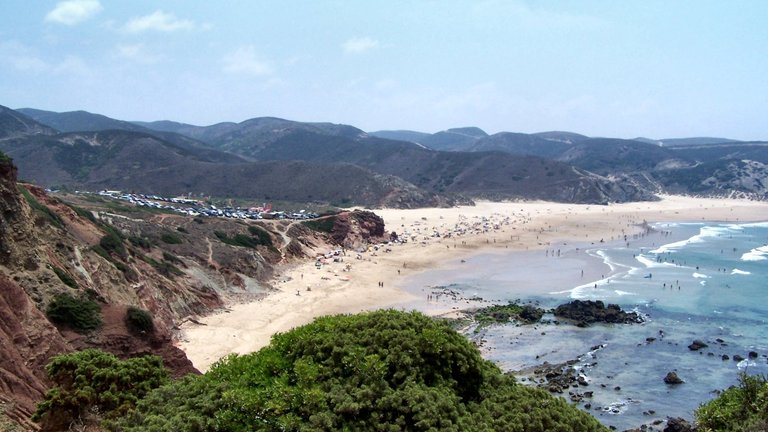
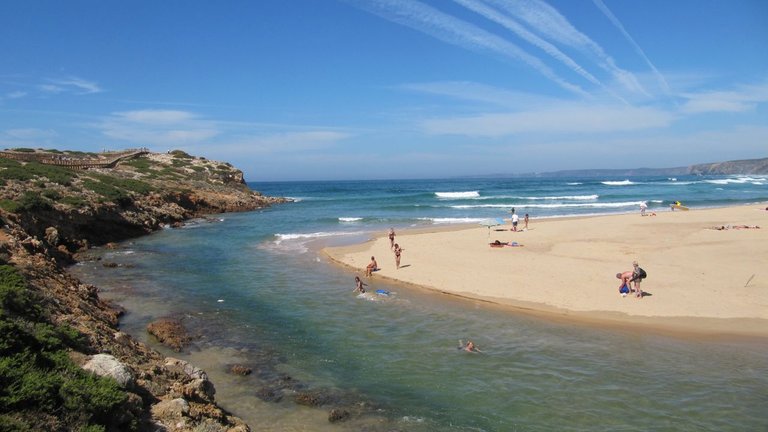
Praia do Amado is the most consistent beginner-to-intermediate spot on this stretch, with a sandy bottom and multiple peaks that spread out crowds; it is also where most of the region's surf schools are based, which tells you something about its reliability.
Praia da Arrifana sits inside a dramatic cliff-backed bay and holds a clean left-hand point break on the right swell direction, generally considered more capable-surfer terrain than Amado. It also offers good shelter from northerly winds.
Praia da Bordeira, just north of Carrapateira, is bigger and more exposed, with a vast sandy beach break and sandbars that work well when Amado is too crowded or too small.

Seasonal Swell Windows & Water Temperatures
Broadly, autumn through spring carries the most consistent swell across western Portugal, since the summer months see the Atlantic low-pressure systems that generate west-coast swell pull further north. June through August is more reliably small, which suits beginners learning on foam boards but disappoints experienced surfers chasing overhead size.
Water temperature follows NOAA's 30-year satellite climatology: cooler than the Algarve's own south coast and noticeably cooler than the Mediterranean, averaging 18.5°C to 20.3°C at peak in August and September. Because of oceanic thermal lag, late summer and early autumn offer the warmest Atlantic water of the year. However, persistent summer upwelling (the Nortada wind) frequently pulls deep 14°C to 16°C water to the shore, requiring at minimum a spring suit in peak summer and a full 3/2mm or 4/3mm wetsuit for the remainder of the year.
The South Coast, for Context
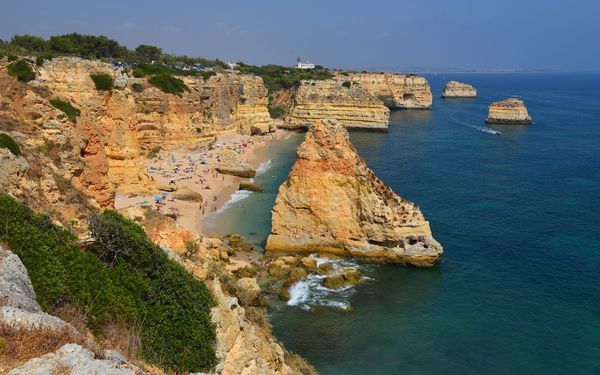
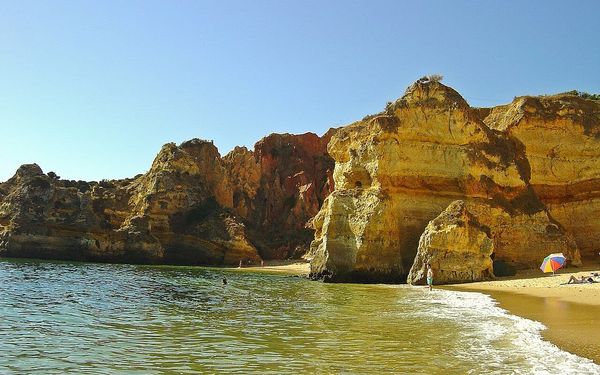
Beaches like Praia da Marinha and Praia Dona Ana are stunning and worth visiting, but they are not a serious surf destination. Waves here are small and inconsistent by comparison, better suited to swimming, snorkeling, stand-up paddleboarding, or a beginner's first-ever lesson in flat conditions.
The only exception occurs during strong southern winter swells (Levante winds), which can occasionally wrap around Sagres and light up southern reefs, but for consistent day-in day-out surfing, always face west toward the open Atlantic.